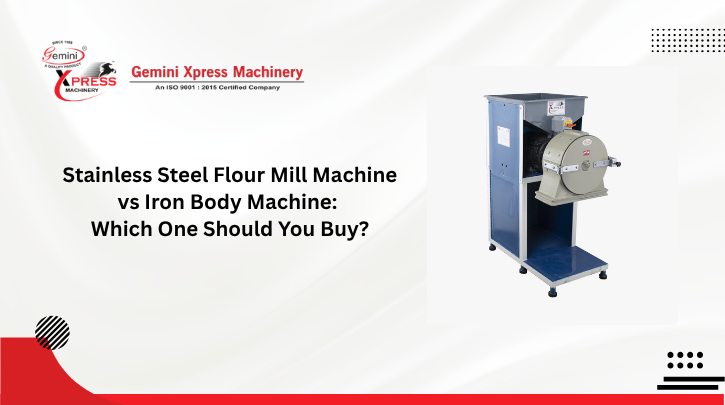
Someone asked me this last month at a machinery shop in Coimbatore. He was standing between two machines — one silver and sleek, one older-looking, painted black. Same motor size. Same stone. The iron one was cheaper by about twelve thousand rupees.
He went with the iron one. Three months later, he called back asking where to get the inner chamber cleaned because the flour was coming out with a slight grey tint.
That story is not unusual. And that is exactly why this comparison matters before you buy, not after.
First, Why Does the Body Material Even Matter
Most people think the body is just the outer shell. Something to hold the motor and stone together. But the body is in constant contact with grain dust, moisture from grinding, and heat. All three things together are a recipe for slow damage — especially with iron.
Iron reacts with moisture. Not right away, but steadily. The inner walls of the chamber start getting a thin layer of oxidation. You cannot always see it. But your flour picks it up. Over time the output colour changes, sometimes the taste does too.
A stainless steel flour mill machine does not do this. The surface stays chemically neutral. No reaction, no residue, no contamination. The flour that comes out is the same colour and taste every single time.
That is the core of this whole comparison.
The Stainless Steel Flour Mill Machine — Actual Advantages
Here is what you get with a stainless steel body that you simply do not get with iron:
- Zero rust risk, even if the machine is in a humid area or near water
- Flour stays clean and uncontaminated throughout the machine’s life
- Cleaning is genuinely easy — a dry cloth or brush, and it is done
- No paint chipping inside the chamber, which happens with iron over time
- Better for shops and businesses where food hygiene matters legally
- Works with wet grains, soaked rice, and moist spices without damaging the body
- Looks professional and stays that way for years
That last point about paint chipping matters more than people realise. Iron body machines are usually painted inside. Over months of grinding, small paint flakes can mix with flour. Not visible, but not something you want either.
The stainless steel flour mill machine has no paint on the food-contact surfaces. What you see is the actual metal, and that metal does not flake or react.
Iron Body Machine — Still Has a Place
Iron is not a bad material. It has genuinely useful qualities:
- Heavier, which means less vibration during grinding — this actually matters at high RPM
- Significantly cheaper upfront — sometimes thirty to forty percent less
- Spare parts widely available in small towns and rural areas
- Old-school mechanics know these machines inside out, and repairs are easier to find
A traditional stone grinding setup at home, used two or three times a week, can run on an iron body machine for years with no problem. Plenty of people still use machines from the 1990s that have iron bodies and they grind perfectly fine.
The condition is proper care. Every single time. Dry the machine after cleaning. Never leave moisture inside. Do not grind wet material. If you do all that consistently, iron holds up. The problem is that consistent proper care rarely happens in a busy kitchen or shop.
Where Things Actually Break Down for Iron
High humidity areas — coastal regions, areas near rivers — accelerate rusting on iron significantly. A machine that might last eight years in a dry city might show rust in the chamber within two years near the coast.
Commercial settings with multiple grinding sessions daily do not allow proper drying time between uses. Moisture builds up. Rust follows.
FSSAI inspections at atta shops and flour mills now check equipment hygiene more seriously than they did five years ago. A rusting chamber fails that check. Replacing an iron body or the full machine is a bigger cost than buying a stainless steel flour mill machine in the first place.
The Long-Term Cost Angle
People compare machines on Day 1 price. That is the wrong way to compare.
An iron machine at Rs 35,000 that needs a chamber replacement or major cleaning every two years ends up costing more than a stainless steel flour mill machine at Rs 47,000 that runs without those issues for the same period.
The actual cost difference shrinks fast once you add repairs, mechanic visits, and lost business during downtime.
So Which One Should You Pick
Home use, grinding twice a week, careful about maintenance — iron body is fine. Save the money.
Daily use, small atta shop, or any food business — stainless steel flour mill machine is the right call. No rust, no contamination risk, easier cleaning, and you stay on the right side of food safety rules.
Wet grains or moist spices — only stainless steel. Iron and moisture is a bad combination regardless of how careful you are.
High-volume continuous grinding where vibration matters — heavier iron bodies still have an edge in some setups, though newer SS machines have started catching up on weight and stability.
Explore Gemini Machinery’s Stainless Steel Flour Mill Machine range for hygienic, durable, and high-performance flour grinding solutions.
FAQ
Q1. Does body material actually affect flour quality?
Yes. A rusting iron chamber contaminates flour slowly. A stainless steel flour mill machine keeps flour clean and unaffected throughout.
Q2. Is the price difference worth it for a home user?
If you grind once or twice a week and maintain the machine well, iron is fine. For daily use or a shop, stainless steel saves money long term.
Q3. Can I use an iron body machine for rice or wet dal?
Not recommended. Wet material speeds up rusting badly. Stick to dry grains only with iron machines.
Q4. How long does a stainless steel flour mill machine last?
With regular cleaning, easily ten years or more. Some well-maintained machines run fifteen years without major issues.
Q5. Are spare parts available for stainless steel machines?
Yes. Most manufacturers stock parts and the availability has improved a lot over the past few years across India.
Follow us on YouTube for flour mill machine demonstrations, maintenance tips, product updates, and expert guidance from the Gemini Machinery team.
