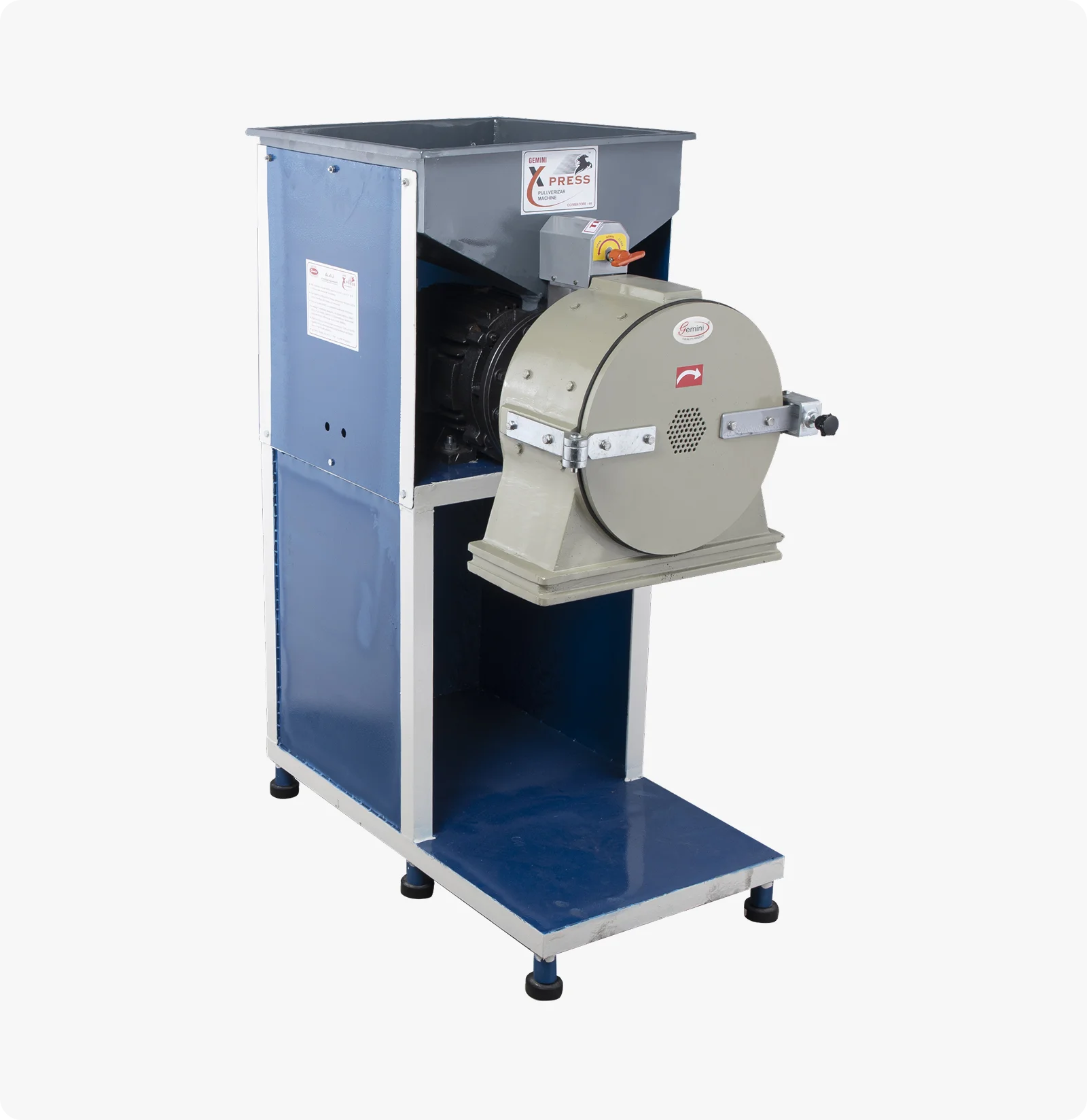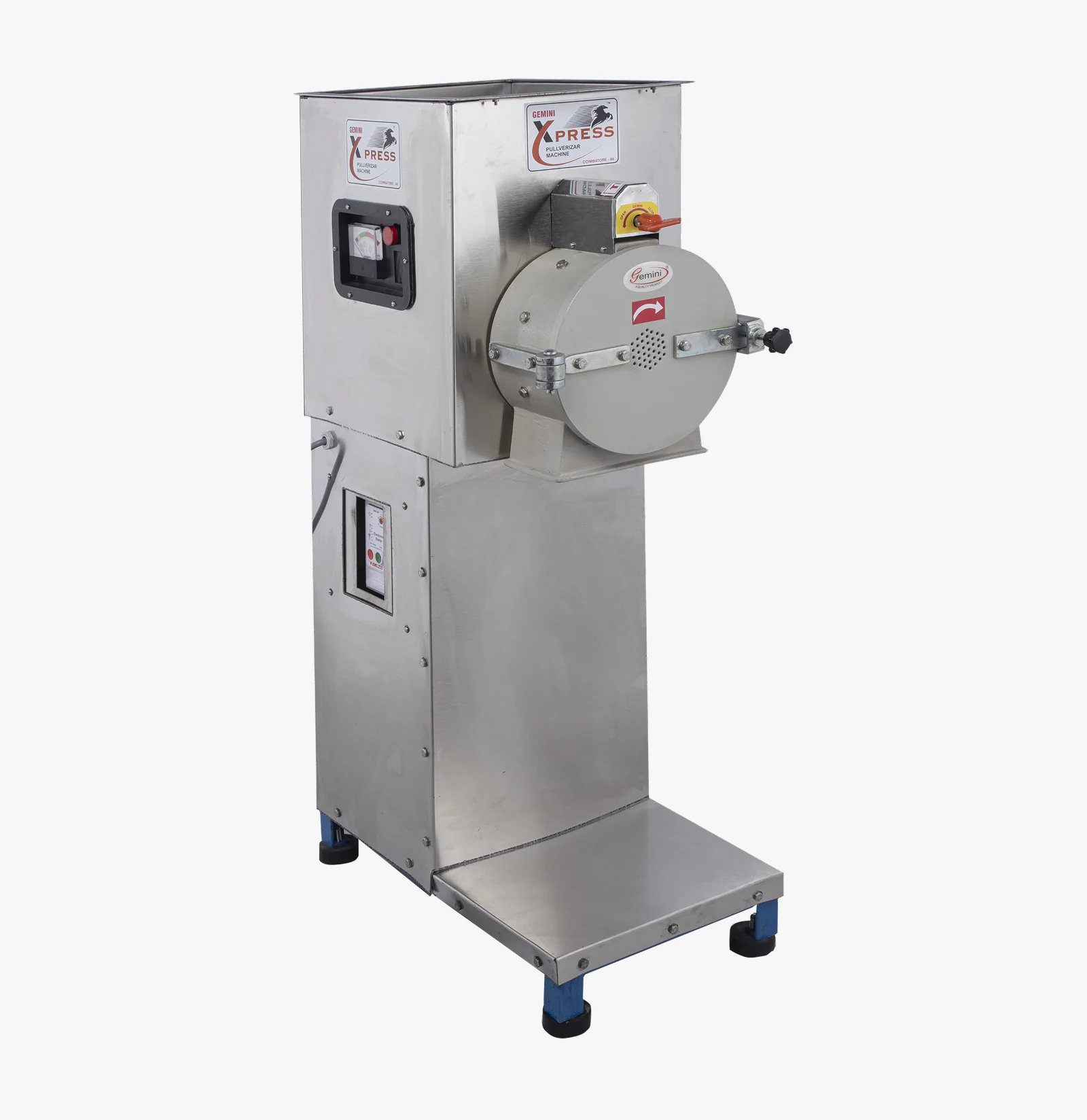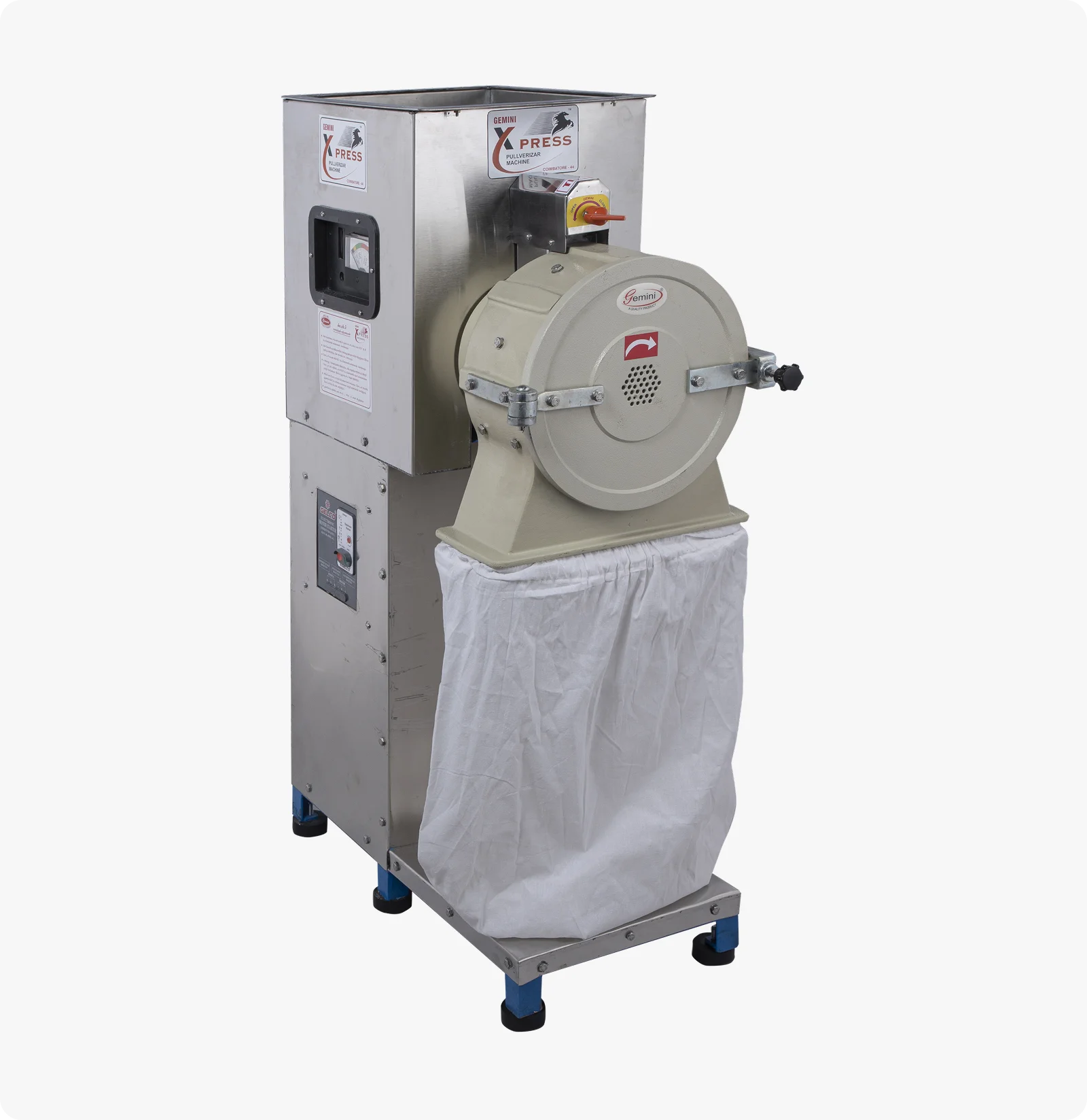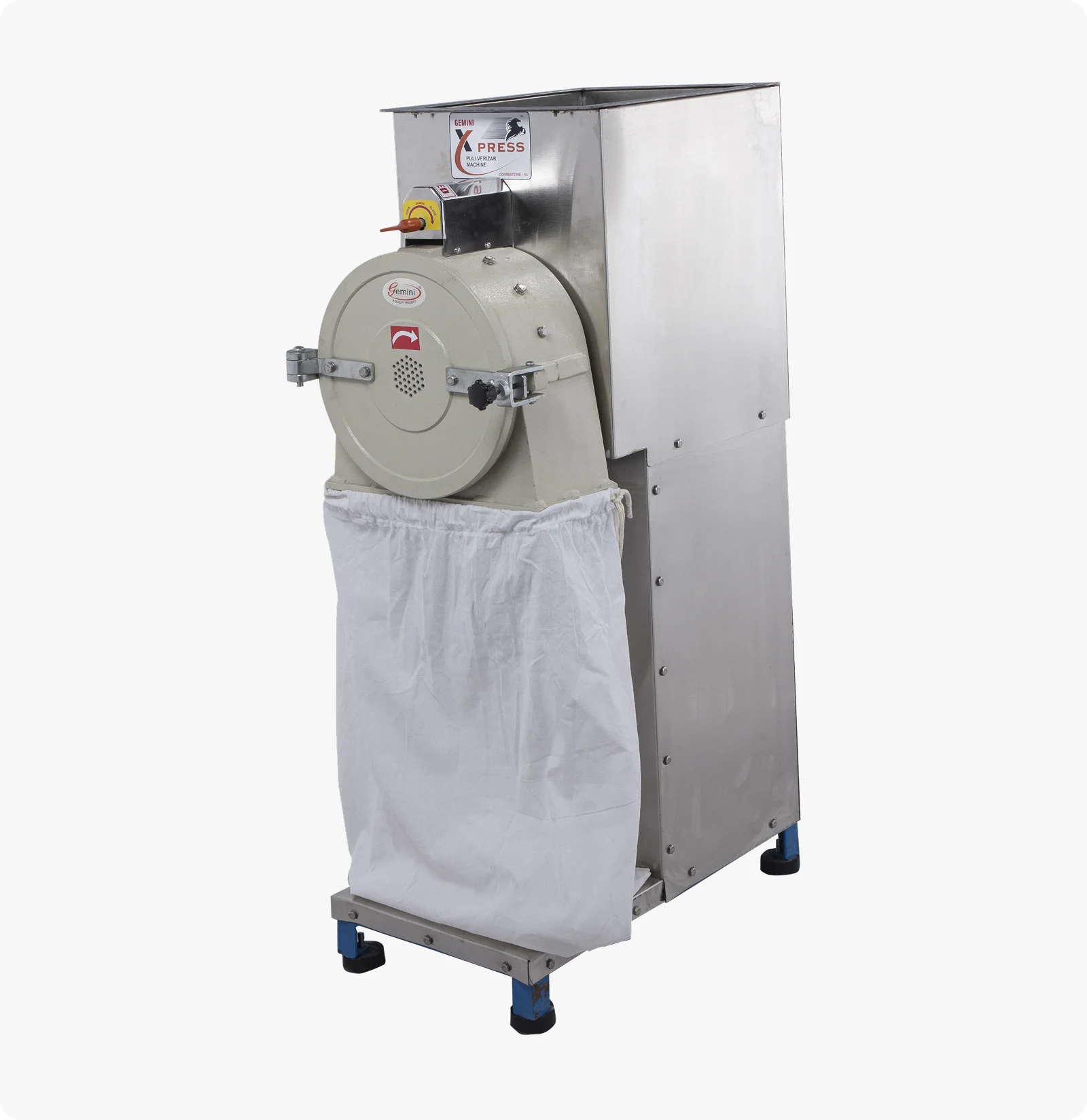
We’ve been building machinery out of Coimbatore since 1985, and somewhere along the way, the flour mill machine became one of the things we do best. If you run a mill, a small atta shop, or a full-scale processing unit, you already know how much a bad machine can cost you in wasted flour and repair bills. That’s the gap our stainless steel flour mill machine range was built to close.
Most customers aren’t chasing fancy features. They want a flour mill machine that grinds fine, doesn’t jam every other week, and doesn’t need a technician on speed dial. So that’s what we’ve focused on – single-stage models for smaller setups, double-stage units when higher output is needed, and motors sized to actually match the workload instead of being oversold on paper.
Every unit is tested on the factory floor before it goes out, not just checked against a spec sheet.
Ordinary steel rusts eventually, no matter how carefully you clean it, and that’s a real problem when the machine is grinding something people eat. A flour mill machine made from the wrong material will show it within a year or two. Our stainless steel flour mill machine body avoids that entirely – food-grade material, no corrosion, and a surface that’s genuinely easy to wipe down at the end of a long shift. Sounds like a small detail on paper, but it matters a lot once the machine’s been running for a while.
We hear this complaint a lot about other brands – machines that pull a lot of power for the output they give back. Our flour mill machine motors are matched to the grinding load instead of being one-size-fits-all. A 3 HP single-stage unit is enough for a smaller shop; if you’re running higher volumes, the 5 HP or 10 HP double-stage flour mill machine handles that load without straining or overheating.
We won’t pretend we invented flour milling. What we’ve done is stay in it long enough to know what breaks, what doesn’t, and why. Every flour mill machine that ships out has gone through actual testing, not a quick once-over before boxing it up. And if something needs attention after the sale, our team actually picks up the phone – that’s not a slogan; it’s just how we’ve managed to stay in business this long.
Call us, WhatsApp us, or drop an email- whatever’s easier for you. We’ll talk you through which model actually fits your volume and budget, instead of just pushing the most expensive one on the list.
You can also explore:
Don’t miss out – subscribe to our YouTube channel for more updates and tips!
Explore our diverse catalog of over 50
high-quality products, meticulously
crafted to meet the demands of
commercial kitchens.
GST: 33AEFPR6441H1ZH
S.F No.220, 1, Vilankurichi Rd,
Opp.Kalappatti Post,
Coimbatore 641048
Tamil Nadu, India
Follow Us On
© 2026 Gemini Xpress Machinery, All Rights Reserved.