
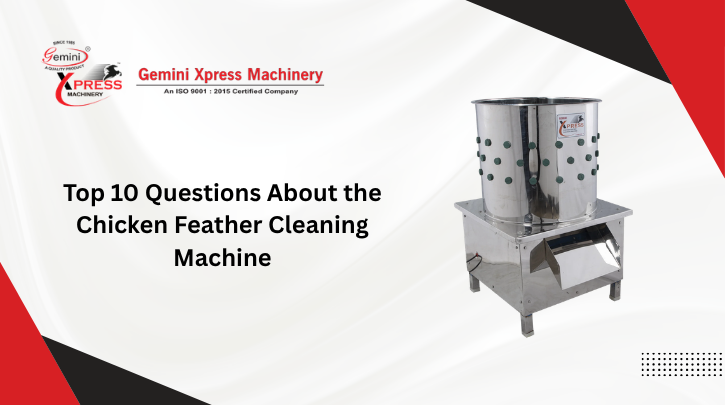
A chicken feather cleaning machine pulls feathers off poultry carcasses right after scalding, and it does the job in a fraction of the time hand plucking takes. Small hatcheries, meat shops, and full-scale processing plants across India now run one of these machines on a daily basis. This blog walks through the ten questions people ask most often about a chicken feather cleaning machine, covering everything from its working process to pricing and buying advice.
What Is a Chicken Feather Cleaning Machine?
A chicken feather cleaning machine is equipment built to strip feathers from a chicken’s body after the scalding stage. Rubber fingers or discs spin against the skin and pull the feathers loose without cutting into the meat.
It works the same way on broilers, layers, or any other poultry bird, so there is no need to adjust the setup between batches. A single worker can run the machine from start to finish, which is a big reason shops move away from hand plucking teams.
Open up a typical chicken cleaning machine and you will see a motor, a drum or rotating plate, rubber plucking fingers, and a spray line feeding water in continuously. Nothing fancy, but each part has a job: the fingers grip the feathers, the water washes debris away, and the drum keeps everything moving at a steady pace so the skin does not get damaged.
Things worth checking before you buy one:
- The body should be stainless steel, not painted metal, since painted surfaces chip and rust fast
- Rubber fingers need to suit your bird size; thicker fingers work better on heavier broilers
- A steady water spray matters more than people expect, as dry plucking tears skin
- Motor power usually falls between 0.5 HP and 3 HP based on how much load you expect
How Does a Chicken Feather Cleaning Machine Work?
Rubber fingers fixed to a spinning drum or plate strike the chicken’s skin over and over, and this pulls feathers out without tearing the flesh underneath, provided the bird has been scalded properly first.
That scalding step matters more than people think. Dip the bird in water that is too cool and the feather roots stay tight, so the machine has to work harder and the skin can bruise. Get the temperature right and the feathers practically lift off on their own.
Once the carcass goes into the drum, this is roughly what happens:
- The drum spins fast, usually within seconds of the bird entering
- Rubber fingers grab and rip out loose feathers as they pass
- Water keeps spraying the whole time to rinse feathers and grime off the skin
- A clean bird comes out the other end in well under a minute
Two workers plucking by hand rarely keep pace with a single chicken feather cleaning machine running at full speed.
Why Do Poultry Farms Need a Chicken Feather Cleaning Machine?
Manual plucking simply cannot match the speed and consistency of a chicken feather cleaning machine, and that gap only grows as order volumes go up.
Hand plucking often leaves tiny feather stubs behind, and tired workers rushing through a large batch tend to tear the skin without noticing. A machine does not get tired. It applies the same pressure at the same speed on the hundredth bird as it did on the first.
Some concrete reasons poultry businesses across India have started making the switch:
- Fewer workers are needed on the floor, sometimes just one to load and unload birds
- Order backlogs shrink because the machine does not slow down during peak season
- Meat stays more hygienic since raw carcasses pass through fewer hands
- Every batch comes out looking the same, which buyers notice and appreciate
Most owners find that a chicken cleaning machine recovers its cost within a year or two, once you add up what hand plucking labour was costing before.
What Are the Main Types of a Chicken Feather Cleaning Machine?
Three types dominate the market right now: drum type, disc type, and vertical type, and each one is built for a different scale of operation.
A shop doing thirty birds a day has no real use for factory-grade equipment, and a factory running three shifts cannot survive on a small drum unit either. The table below breaks down where each type fits.
| Machine Type | Best Suited For | Capacity (Birds/Hour) | Floor Space |
| Drum Type | Home-based or small sellers | 20 to 40 | Low |
| Disc Type | Medium poultry shops | 40 to 100 | Medium |
| Vertical Type Chicken Cleaning Machine | Large processing factories | 100 and above | High |
Matching your bird volume to the right type saves money upfront and avoids buying more machine than you actually need.
How Much Does a Chicken Feather Cleaning Machine Cost?
Price depends heavily on capacity, build quality, and how automated the unit is, so two machines that look similar can cost very differently.
A small shop that does not run round-the-clock does not need to spend on a heavy-duty model. Factories, on the other hand, tend to pay more upfront for bigger drums and stronger motors because downtime costs them far more in the long run.
Rough price brackets seen in the Indian market:
- Small drum model: Rs 15,000 to Rs 30,000
- Medium disc model: Rs 35,000 to Rs 70,000
- Large vertical model: Rs 80,000 and above
Before you finalize anything, ask the seller directly about the warranty period, how much spare parts cost, and how often the rubber fingers wear out and need replacing.
Which Chicken Feather Cleaning Machine Should You Buy?
The right choice comes down to three things: how many birds you process daily, what your budget allows, and how much floor space you actually have.
A small vendor selling a few dozen birds a day gains nothing from a factory-grade setup, and a large processor cannot rely on a compact drum model without creating a bottleneck.
A short checklist before you decide:
- Match motor power to what you process today, not what you hope to process someday
- Look closely at the build material, since cheap metal frames wear out within a year
- Ask how quickly the seller responds when a part breaks down
- Weigh the upfront price against how long the warranty actually runs
Buyers who spend a little extra time on this checklist usually end up with a chicken cleaning machine that runs for years without major repair bills.
Where Can You Buy a Reliable Chicken Feather Cleaning Machine?
Buy from a manufacturer that services what it sells, not one that disappears after the invoice is paid.
Gemini Machinery builds a range of these machines for buyers from small shop owners right up to large processing plants. Their full catalogue is available here: Chicken Feather Cleaning Machine
Before committing to any seller, read through genuine customer reviews and get clarity on what the warranty covers and what it leaves out.
Stay up to date with the latest machines, factory tours, and helpful buyer tips by following Gemini Machinery on YouTube and LinkedIn.
Also Read: Chicken Cleaning Machine vs Manual Cleaning
Frequently Asked Questions
1. What does a small chicken feather cleaning machine cost?
A small chicken feather cleaning machine typically costs between Rs 15,000 and Rs 30,000 in India.
2. How many birds can one machine clean per hour?
Depending on the model, a machine can clean anywhere from 20 to over 100 birds in an hour.
3. Does this equipment damage the meat during cleaning?
No, a properly set chicken cleaning machine removes feathers without tearing the skin or meat.
4. What material should the machine body be made of?
Stainless steel is the preferred choice because it resists rust and is easy to clean.
5. Is a chicken feather cleaning machine worth it for a small farm?
Yes, a compact drum model is affordable and still saves considerable time for small farms.
